
Turn an ordinary room, garage, corner, or unused space into a home gym that motivates you to train consistently.
Building a home gym is about more than buying exercise equipment and putting it against a wall. The right home gym should fit your space, your goals, your lifestyle, and your budget.
Whether you have an entire room available or only a small corner, you can create a workout environment that makes exercise more convenient, organized, and enjoyable.
In this complete 2026 guide, we’ll take you through the transformation process from choosing your space and planning your equipment to creating an environment that makes you want to come back for your next workout.
And at the end, you’ll find the PowerHome 7-Day Home Gym Transformation Challenge to help you turn your plans into action.
1. Choose the Right Space for Your Home Gym
You don’t need a huge room to build a useful home gym.
A spare bedroom, garage, basement, living-room corner, covered outdoor area, or dedicated workout room can all work. The important thing is choosing a space where you can move safely and comfortably.
Before buying equipment, consider:
- How much floor space you have
- Ceiling height
- Ventilation
- Natural or artificial lighting
- Electrical outlets
- Flooring
- Storage possibilities
- Noise considerations
- How easily you can access the space
Your goal isn’t to fill every available inch. Your goal is to create enough room to exercise safely while keeping the area practical.
A simple rule
Plan your space before you plan your shopping list.
This can prevent you from buying equipment that doesn’t fit or creating a crowded workout area.
2. Measure Before You Buy
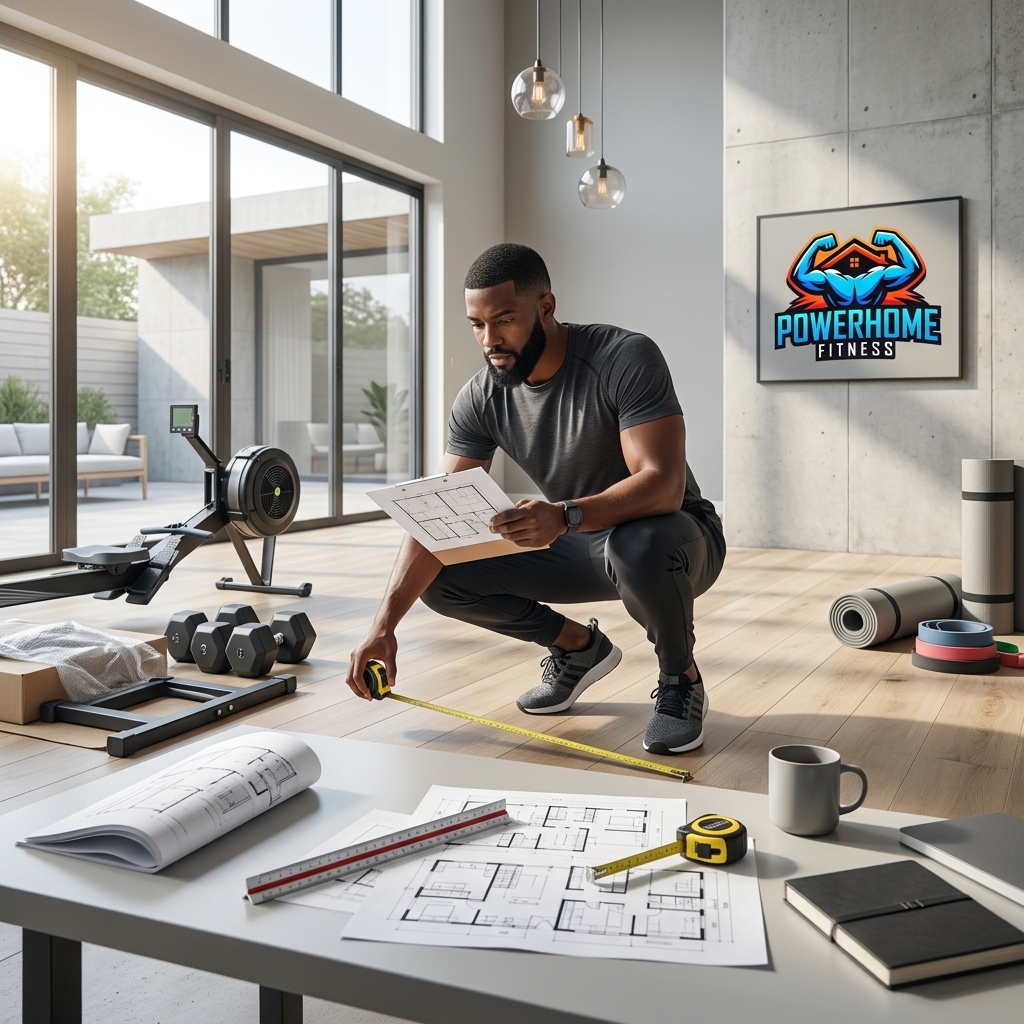
One of the easiest mistakes when creating a home gym is purchasing equipment before measuring the available space.
Measure the length and width of the room and identify doors, windows, shelves, columns, outlets, and other obstacles.
Then consider the space required to actually use each piece of equipment.
For example, a dumbbell rack may occupy a small footprint, but you still need enough room around the dumbbells to perform exercises safely.
A treadmill also requires more than the space covered by the machine itself because you need room to get on and off and enough clearance around it.
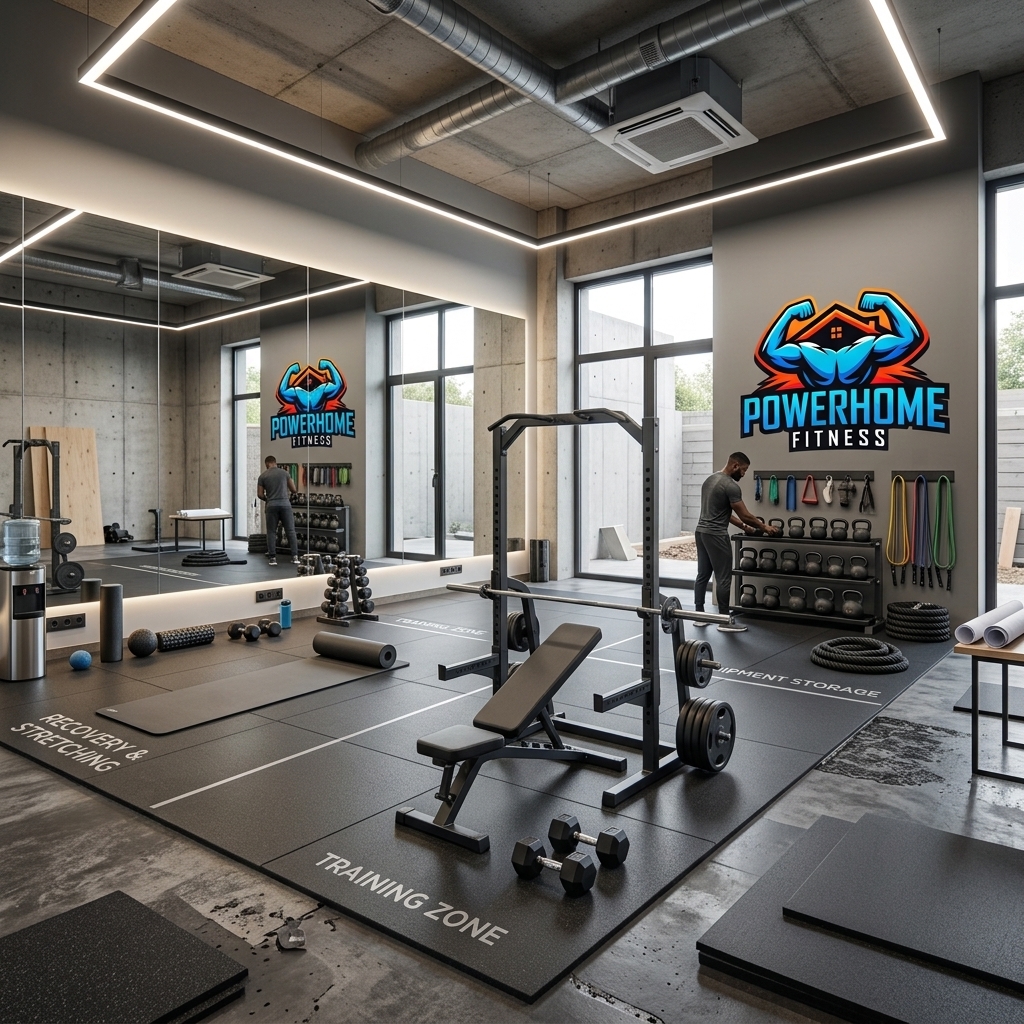
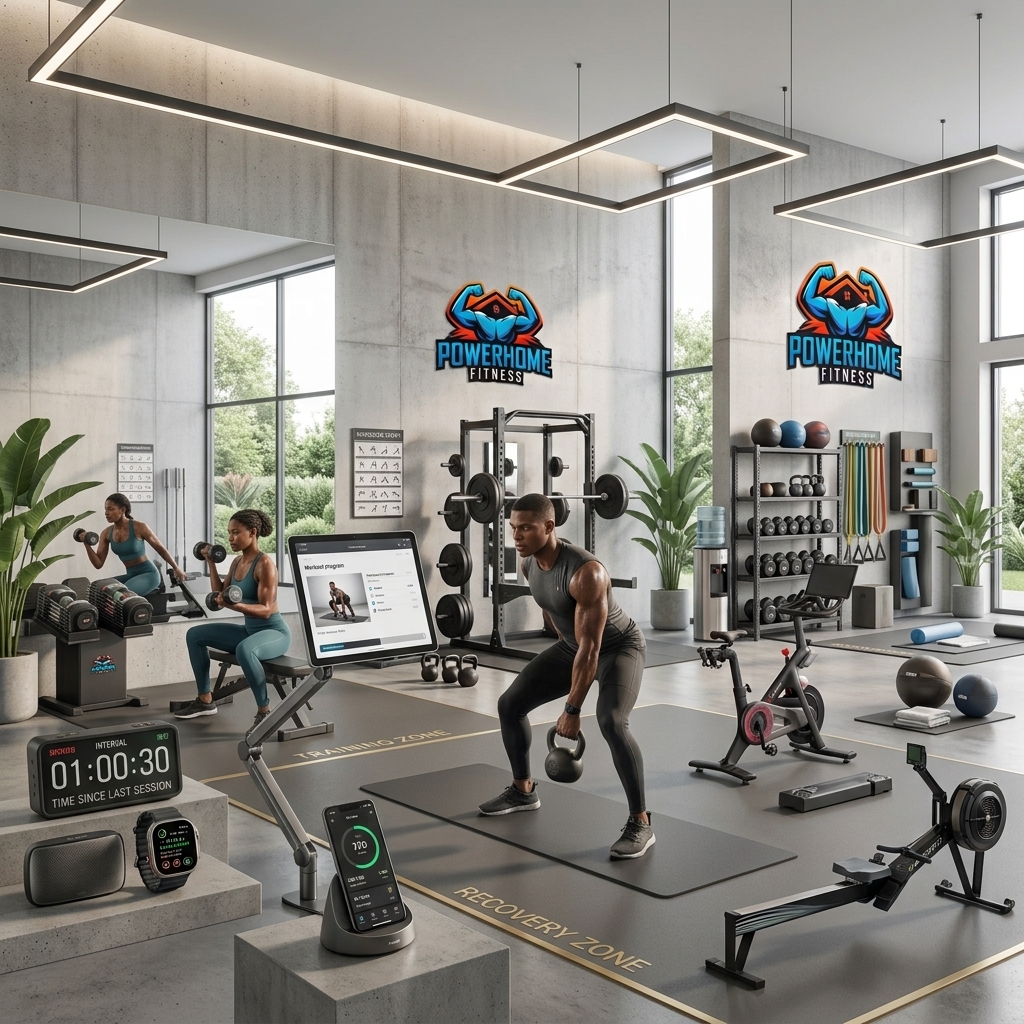
Create three zones
A simple home gym can be divided into:
Training Zone:
The main area where you perform exercises.
Equipment Zone:
Where dumbbells, kettlebells, bands and other equipment are stored.
Recovery Zone:
A smaller area for stretching, mobility work and cool-down exercises.
This simple layout can make even a compact gym feel organized.
3. Build Your Foundation
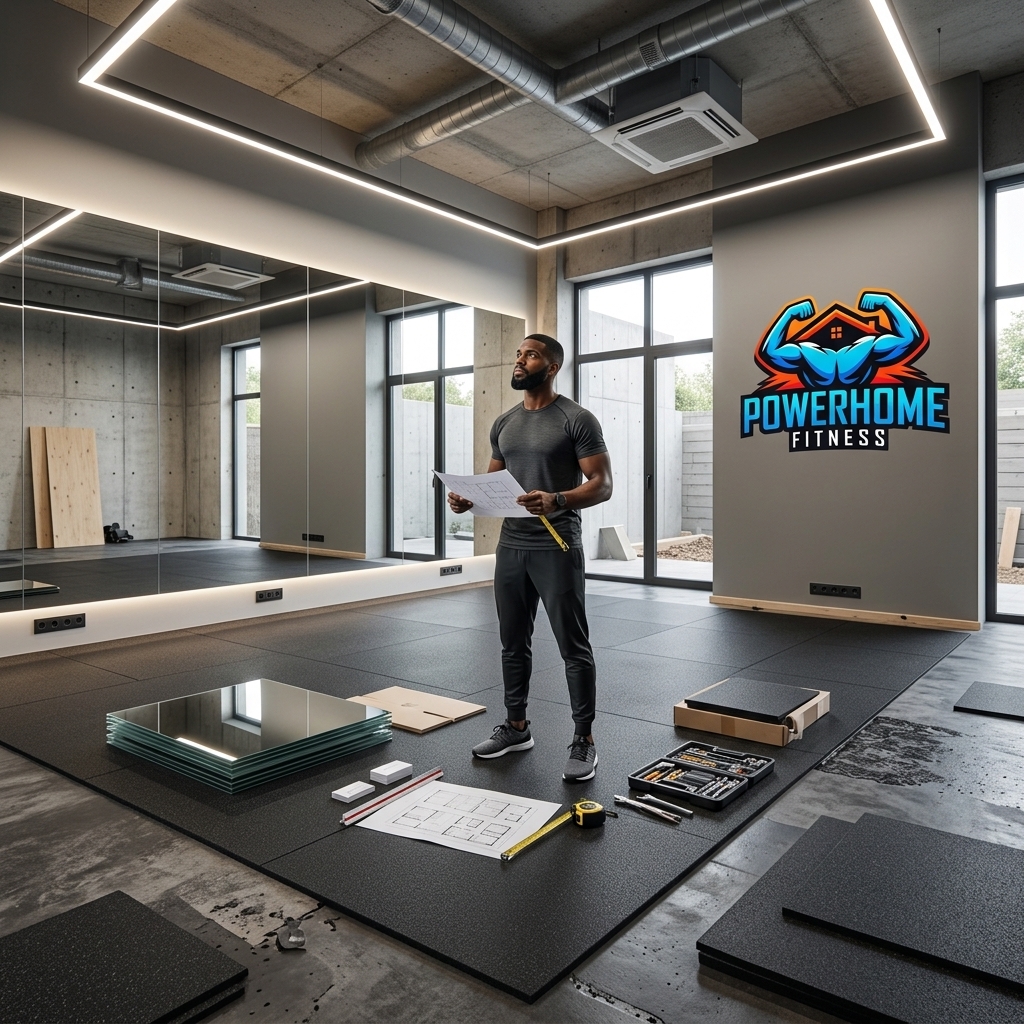
Before filling your gym with equipment, build a good foundation.
Flooring
The right flooring can improve comfort and help protect the underlying floor from exercise equipment and weights.
Rubber flooring or high-quality gym mats can work well for many home-gym setups.
Lighting
Good lighting can make the room feel more energetic and inviting.
Natural light is excellent when available. Otherwise, use bright, comfortable lighting that allows you to clearly see your equipment and surroundings.
Ventilation
Workouts generate heat quickly. Good airflow can make your training environment much more comfortable.
A window, fan, air-conditioning system, or suitable ventilation setup can help depending on your location and space.
Mirrors
A mirror isn’t just decorative. It can help you observe your movement and positioning during certain exercises.
The goal is to create a space that feels comfortable enough to use repeatedly.
4. Choose Your Core Equipment
Now comes the exciting part: choosing the equipment.
The best approach is not to buy everything at once.
Start with equipment that gives you the greatest variety of workouts.
Adjustable Dumbbells
Adjustable dumbbells can provide multiple resistance levels while taking up less space than a large collection of individual weights.
Workout Bench
A quality adjustable bench can expand the number of exercises you can perform, including presses, rows, fly movements and various dumbbell exercises.
Resistance Bands
Bands are lightweight, portable and useful for warm-ups, accessory exercises and resistance training.
Kettlebells
Kettlebells can be used for movements such as swings, squats, presses and carries.
Barbell and Plates
For people focused on progressive strength training, barbells and weight plates can become an important part of a home gym.
Rack or Power Cage
A suitable rack can provide a platform for a variety of barbell-based exercises, depending on the user’s experience and available space.
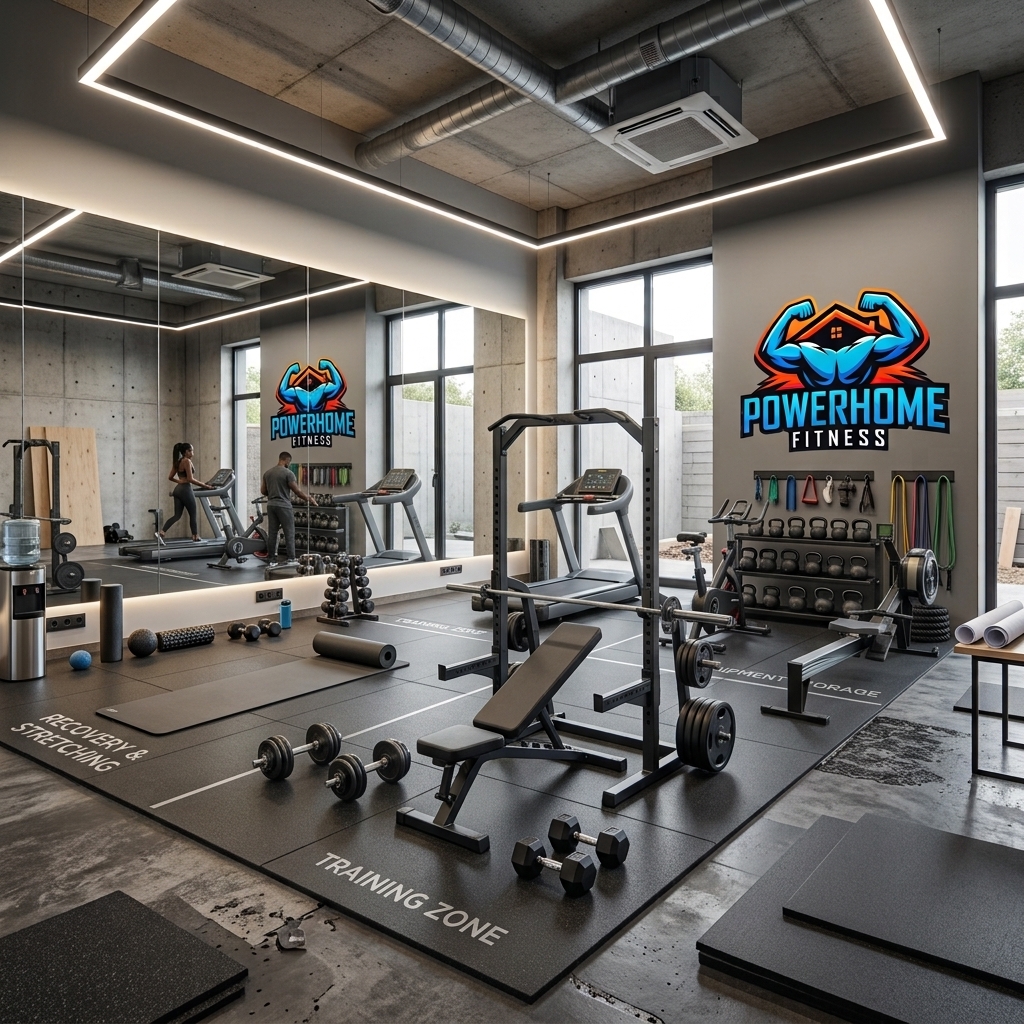
Cardio Equipment
Depending on your goals and available space, a treadmill, exercise bike or rowing machine can add another dimension to your home workouts.
The key principle
Buy for versatility, not simply quantity.
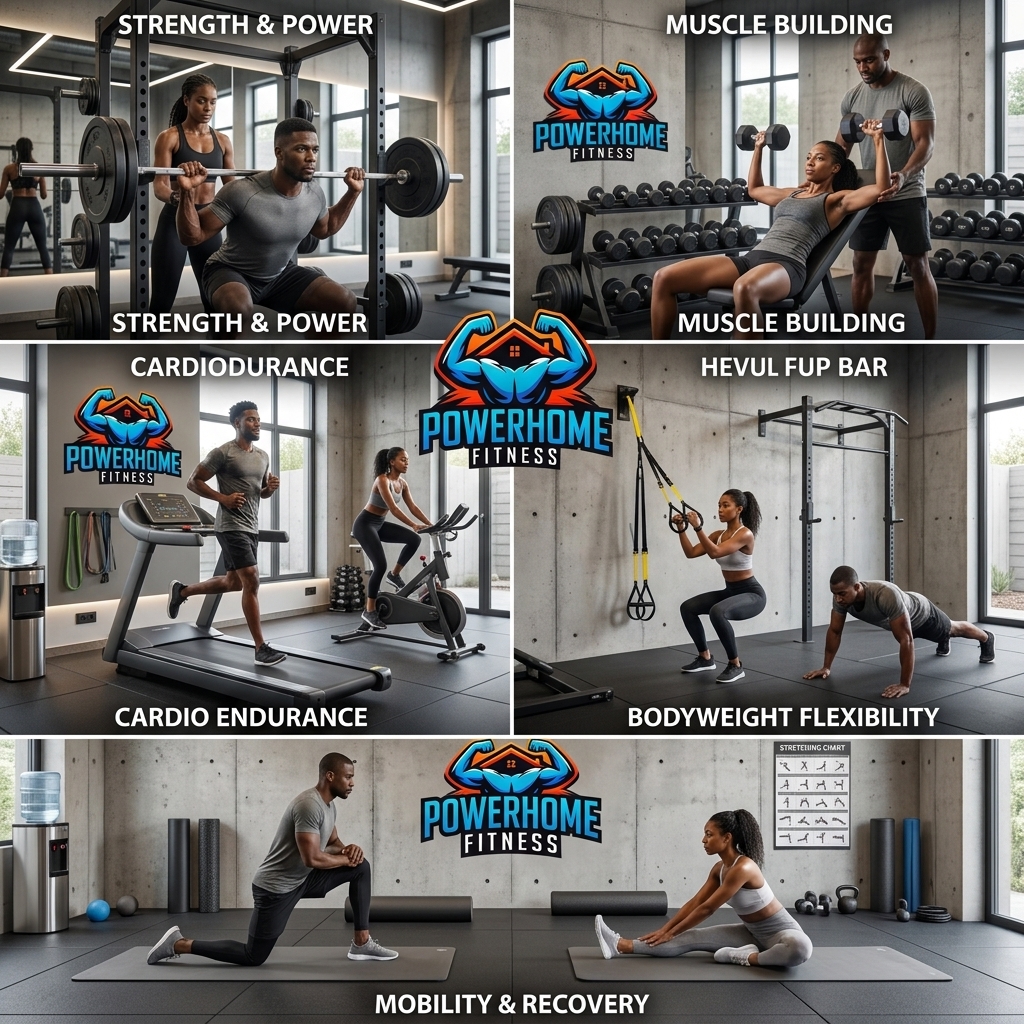
5. Build Your Gym Around Your Fitness Goal
Your home gym should reflect what you actually want to accomplish.
Different goals can require different equipment priorities.
Strength
Prioritize equipment that allows progressive resistance training, such as dumbbells, barbells, plates and appropriate racks.
Muscle Building
A combination of free weights, benches and resistance equipment can provide a wide range of exercises for different muscle groups.
Fat Loss
Combine resistance training with cardiovascular exercise and an appropriate nutrition strategy.
General Fitness
A balanced setup containing strength equipment, cardio options and space for bodyweight movements can provide flexibility.
Mobility and Recovery
Don’t forget the importance of stretching, mobility work and recovery.
Your goal determines your equipment—not the other way around.
6. Build Your Gym According to Your Budget
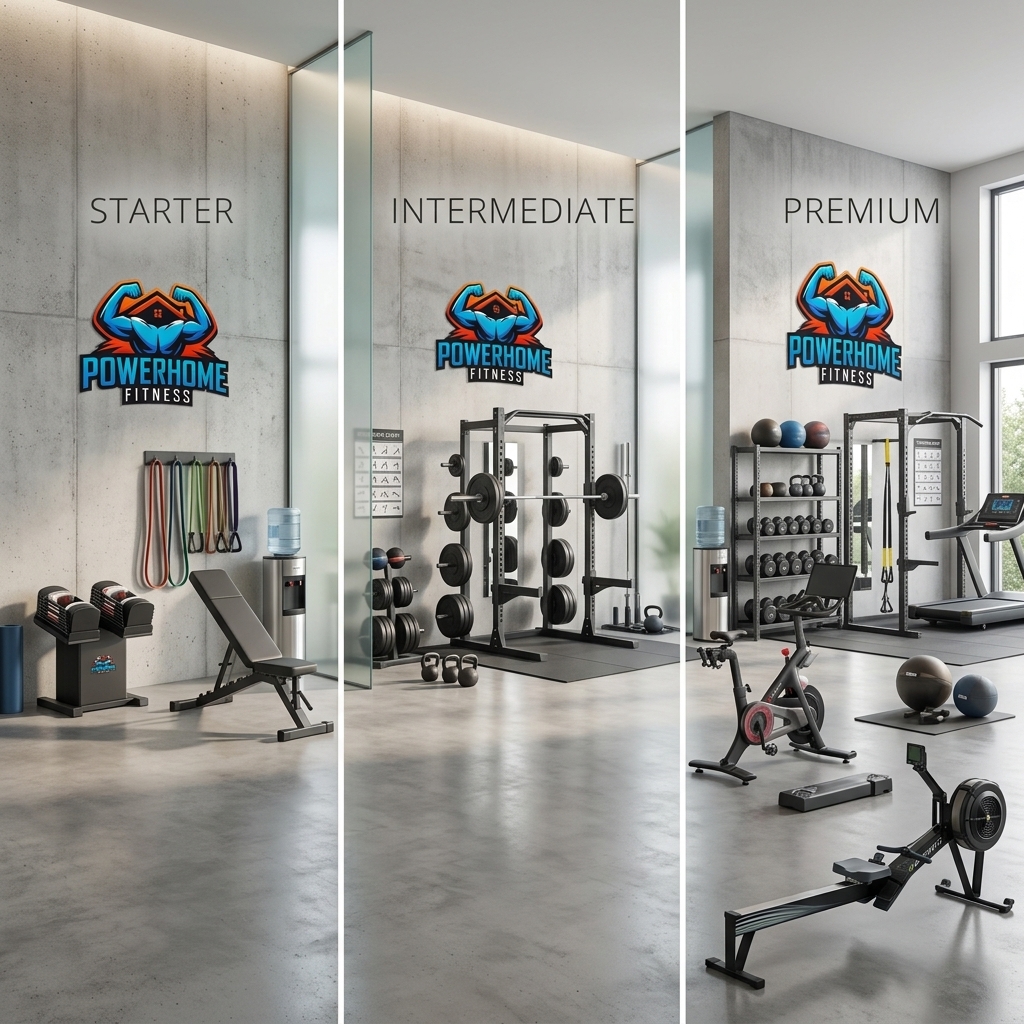
A great home gym doesn’t have to be expensive from day one.
Instead, build progressively.
Starter Setup
Focus on versatile basics such as:
- Adjustable dumbbells
- Workout mat
- Resistance bands
- Adjustable bench
- One or two kettlebells
Intermediate Setup
You can add:
- More weight options
- Barbell and plates
- Compact rack
- Additional storage
- Cardio equipment
Premium Setup
A larger space may allow:
- Full power cage
- Multiple weight stations
- Treadmill
- Exercise bike
- Rowing machine
- Advanced storage
- Dedicated recovery area
The important thing is to avoid buying equipment simply because it looks impressive.
Choose equipment that you will actually use.
7. Design Your Gym for Consistency
This is where your home gym becomes more than a room full of equipment.
Make the environment easy to use.
Keep frequently used equipment accessible. Don’t bury your dumbbells behind boxes or leave resistance bands tangled in a corner.
Keep your workout area clean.
Create a simple routine for returning equipment after every session.
You can also create a dedicated place for:
- Water bottles
- Towels
- Workout notebooks
- Phone or tablet
- Headphones
- Resistance bands
- Recovery equipment
The easier your gym is to use, the fewer obstacles stand between you and your workout.
8. Add Smart Fitness Technology
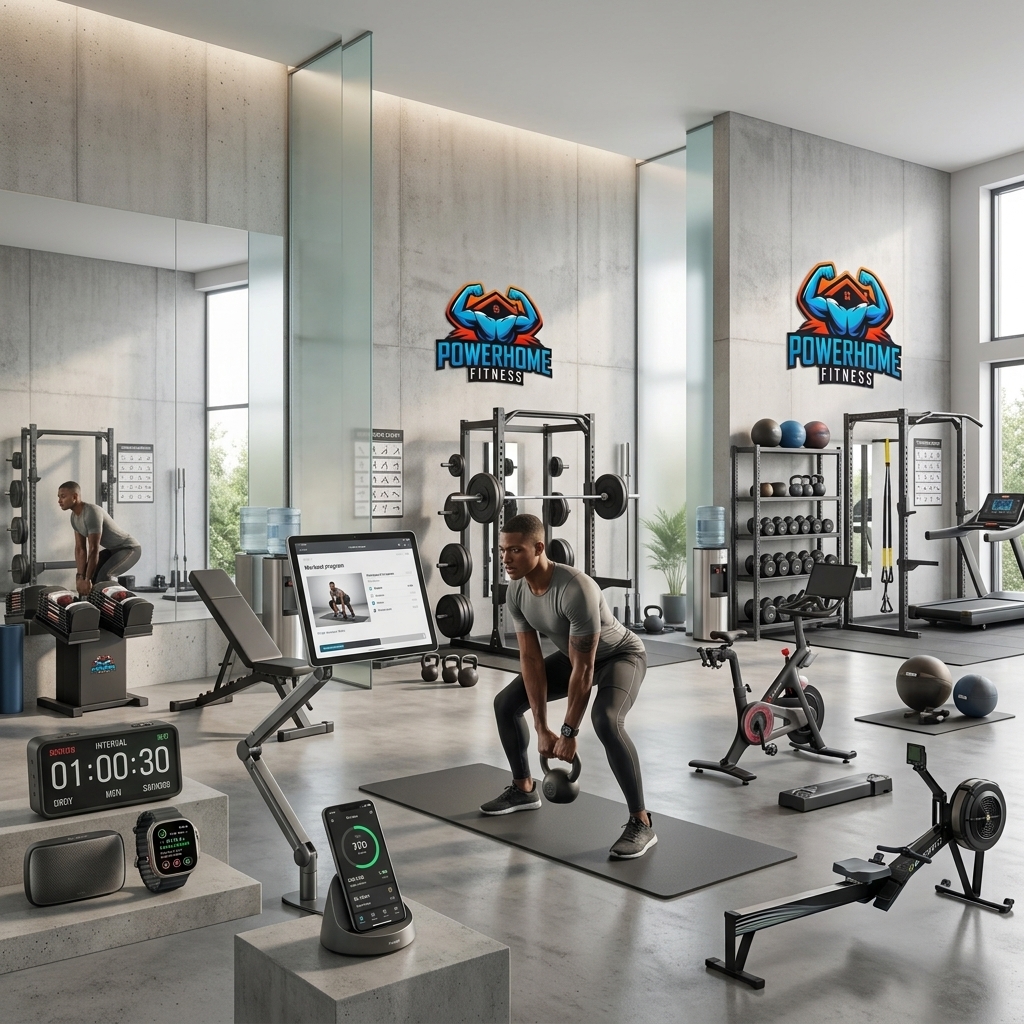
Technology can make your home gym more engaging and organized.
Depending on your preferences, you could use:
- Workout tracking apps
- Fitness watches
- Digital timers
- Heart-rate monitors
- Bluetooth speakers
- Tablets or screens
- Workout calendars
You don’t need every gadget.
Choose technology that genuinely improves your training experience.
For example, a simple workout timer can help structure intervals, while a workout-tracking app can help you record sets, repetitions and resistance levels.
9. Create a Premium Look Without Losing Functionality
A beautiful home gym can make the space more enjoyable—but appearance should never come at the expense of functionality.
Consider:
- Clean neutral walls
- Strategic mirrors
- Modern lighting
- Organized storage
- Quality flooring
- Natural plants
- Minimal clutter
- Motivational but tasteful wall graphics
You can create a luxury appearance without turning your gym into a showroom.
Remember:
The best-looking home gym is the one that gets used.
10. Turn Your Home Gym Into Your Personal Fitness Headquarters
The ultimate transformation isn’t about the equipment.
It’s about what happens after you build the space.
Your home gym can become the place where you:
- Start your mornings
- Complete your evening workouts
- Build strength
- Improve endurance
- Learn new exercises
- Track progress
- Stretch and recover
- Build consistency
- Create healthier routines
Instead of thinking of your home gym as another room, think of it as your personal fitness headquarters.
Every workout becomes another opportunity to improve.
Every session adds to your consistency.
And every small improvement contributes to the bigger transformation.
The PowerHome 7-Day Home Gym Transformation Challenge
You’ve planned the space.
You’ve chosen your equipment.
Now it’s time to take action.
Instead of trying to transform everything in one day, use the next seven days to build momentum.
DAY 1 — Choose & Measure Your Space
Select the area where your home gym will live.
Measure the available space.
Write down the dimensions and identify doors, windows, outlets and other obstacles.
Today’s goal: Know exactly what you’re working with.
DAY 2 — Clear & Prepare
Remove unnecessary items from your workout area.
Clean the floor.
Organize anything that needs to remain in the room.
Create a clear training zone.
Today’s goal: Make your space physically ready.
DAY 3 — Plan Your Equipment
Write down your fitness goals.
Then choose equipment that supports those goals.
Don’t try to buy everything at once.
Start with versatile equipment that gives you multiple exercise options.
Today’s goal: Create your equipment plan.
DAY 4 — Upgrade the Environment
Focus on the details that make your space comfortable.
Consider flooring, lighting, ventilation, mirrors and storage.
Even small improvements can make a major difference.
Today’s goal: Make your gym somewhere you want to spend time.
DAY 5 — Set Up Your Equipment
Place your equipment according to how you plan to train.
Keep frequently used items accessible.
Create dedicated storage areas.
Make sure your workout area remains open and safe.
Today’s goal: Turn your planned space into a functional gym.
DAY 6 — Create Your First Workout
Don’t wait for the perfect program.
Create a simple full-body session appropriate for your fitness level.
For example:
Warm-Up — 5 minutes
- Marching or light cardio
- Arm circles
- Hip mobility
- Bodyweight movements
Main Workout
- Squats
- Dumbbell presses
- Rows
- Shoulder presses
- Lunges
- Plank
Cool-Down — 5 minutes
- Gentle stretching
- Controlled breathing
- Light mobility
Adjust the exercises, resistance and volume to your experience level.
Today’s goal: Create a workout you can repeat.
DAY 7 — Complete Your First Full Session
This is the day everything comes together.
Enter your new home gym.
Put your phone aside if possible.
Warm up.
Complete your workout.
Cool down.
Then record how you felt.
You don’t need to have the world’s most advanced home gym.
You simply need a space that helps you take action.
Today’s goal: Start your fitness journey.
Your Home Gym Transformation Starts With One Decision
A home gym doesn’t have to begin with a huge budget, a massive room or dozens of machines.
It can begin with one small space.
One piece of equipment.
One workout.
One decision to become more consistent.
As your goals develop, your gym can develop with you.
Start with what you need today and build toward what you want tomorrow.
At PowerHome Fitness, our goal is to help you create a workout environment that fits your lifestyle—whether you’re building a compact beginner gym or creating a complete training space.
Your space.
Your equipment.
Your goals.
Your transformation.
Power Your Fitness. Anywhere.
Explore fitness equipment and build your home gym with PowerHome Fitness.
Frequently Asked Questions
How much space do I need for a home gym?
You don’t necessarily need an entire room. A carefully planned corner or compact space can work for basic equipment and bodyweight training. Larger equipment requires additional clearance, so always measure your available space before purchasing.
What equipment should I buy first?
Start with versatile equipment that supports your goals. Adjustable dumbbells, a workout bench, resistance bands and a kettlebell can provide many exercise possibilities without requiring a huge amount of space.
Can I build a home gym on a small budget?
Yes. Build gradually instead of purchasing everything at once. Start with the equipment you are most likely to use and expand as your training needs develop.
Is a home gym worth it?
A home gym can make exercise more convenient by reducing the need to travel to another location to train. Its usefulness ultimately depends on whether the space and equipment help you maintain a consistent workout routine.
Should I buy cardio equipment?
That depends on your goals and available space. If cardiovascular training is an important part of your routine, equipment such as a treadmill, exercise bike or rowing machine may be useful.
How do I keep my home gym organized?
Assign storage locations for your equipment and return everything after each workout. Keeping frequently used equipment accessible can also make your workouts easier to start.
Final Takeaway
The perfect home gym isn’t necessarily the biggest or most expensive one.
It’s the one that fits your space, supports your goals and makes it easier for you to train consistently.
Start small.
Plan intelligently.
Choose versatile equipment.
Keep your space organized.
And most importantly—
Use it.
Your transformation doesn’t begin when the gym is perfect.
It begins with your first workout.